A nominal lifting capacity is not enough to choose equipment for a mixed auto-rickshaw fleet: vehicle weight, axle loading, deck dimensions, underbody access, floor strength and safety controls all affect the decision. By the end, you will have a practical specification and procurement checklist for comparing a three-wheeler lift against your vehicles, workshop tasks and site conditions.
Key takeaways
- Size capacity from the heaviest loaded vehicle, not its kerb weight.
- Check wheelbase, tyre position and underbody access before selecting platform length.
- Specify hydraulic locks, hose-burst protection, emergency lowering and electrical isolation.
- Confirm compatibility with CNG, LPG, electric vehicles and wet wash-bay floors.
Start with the heaviest vehicle and its real axle loads
Start with the heaviest loaded vehicle, not the most common one. Calculate required capacity from its measured working load: vehicle weight plus tools, spare parts, removed components and any service load placed on or inside it. Kerb weight alone is inadequate.
Passenger, cargo, CNG, LPG and electric three-wheelers can place different loads on the front wheel, rear axle, left side and right side. Ask the manufacturer for total safe working load and separate front/rear and left/right limits. Confirm whether capacity remains uniform across the deck or falls when the single front wheel sits near one end.
A nominal two-tonne or three-tonne label proves nothing without those limits.
Build a fleet table containing:
- Gross vehicle weight and measured front and rear axle loads
- Wheelbase, wheel track, overall length and tyre size
- Fuel-system location, battery location and the heaviest loaded cargo configuration
Select a three wheeler lift in Coimbatore only when its documented limits exceed the highest measured working load with a clear safety margin. Check the supplier’s figures against every vehicle family, including the cargo model that carries the greatest load.
A lift can meet its total-tonnage label yet fail because one wheel or one side exceeds its local rating. Recheck the calculation after adding removed parts that will remain on the deck during servicing.
Match the platform to wheelbase, body shape and repair access
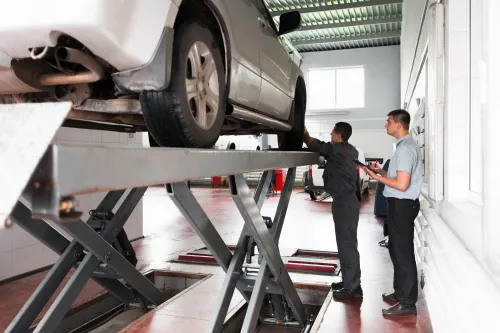
A platform fits only when its usable length and width contain the vehicle’s contact points, not merely its body. Measure wheelbase, wheel track, overall length, low-chassis clearance and approach angle for every family before choosing a garage lift for three wheelers.
| Vehicle family | Platform and ramp checks | Access risk |
|---|---|---|
| Passenger three-wheeler | Support the single front wheel fully; keep both rear wheels inside the rated deck area; check cabin overhang, ramp length, minimum and maximum height | Decks can block engine, transmission and exhaust access |
| Cargo three-wheeler | Check loaded wheelbase, rear axle position and cargo-body overhang; place wheel stops behind the actual tyres | A short ramp or fixed stop can leave the body dangerously unsupported |
| CNG or LPG three-wheeler | Keep cylinders, multivalves and vapour lines clear; verify approach angle and deck width | Contact with the tank or lines can create fuel-system damage |
| Electric three-wheeler | Check battery-tray clearance and approved lifting points | Deck contact can damage the tray or high-voltage cables |
Record platform length and width, minimum platform height, maximum lifting height, ramp length, approach angle and wheel-stop position on the supplier drawing. Specify anti-rollback protection for approach ramps, plus side extensions or adjustable wheel stops when wheel tracks differ.
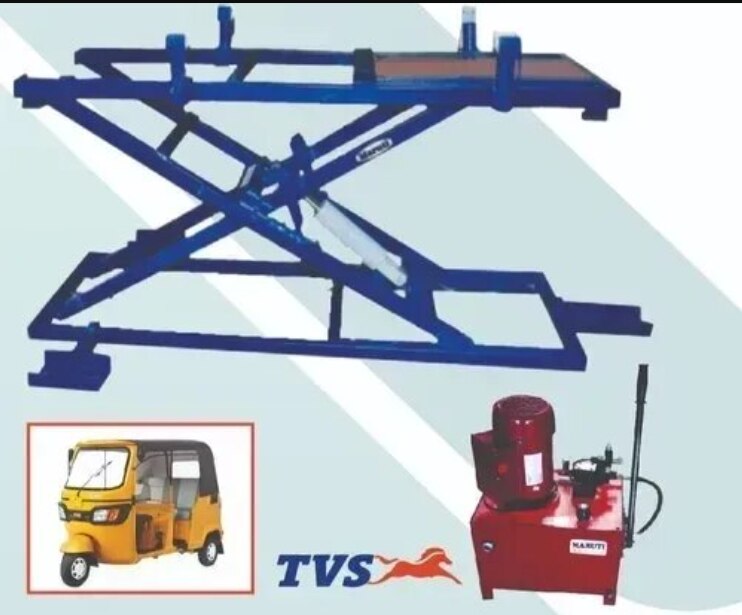
A full-deck scissor lift supports washing, inspections, tyre work and some brake jobs. Its platforms can obstruct the differential, fuel-system and underbody areas, so specify removable recesses, sliding sections or an auxiliary jacking beam for clutch, gearbox, suspension or underbody work.
A scissor lift for fleet maintenance is the wrong choice if it prevents safe jack placement.
Confirm each manufacturer’s designated lifting points. Never lift beneath thin floor panels, tanks, cylinders, battery trays or unverified suspension parts. Choose the garage lift for three wheelers that provides approved frame contact and clear space for the repairs your fleet actually performs.
Specify the hydraulic, electrical and structural safety package
Before ordering a three wheeler scissor lift for a fleet workshop in Coimbatore, demand documents that prove the equipment suits both the site and the daily workload.
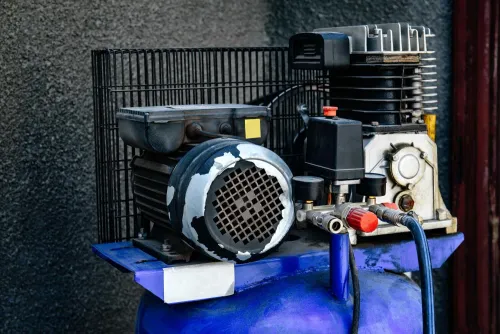
1. Obtain the hydraulic power-pack motor rating, operating pressure, oil grade, oil quantity, raising time, lowering time and complete vehicle-in/vehicle-out cycle time. Ask whether each published time was measured with an empty platform; an unloaded test can hide slow turnaround under a vehicle.
2. Require positive mechanical locks at several height positions, an accessible emergency stop, controlled emergency lowering, hose-burst or anti-burst valves and hydraulic overload protection. Confirm the safe-working clearance beneath the deck. A pressure-relief valve does not replace mechanical support during a long repair.
3. Request the foundation drawing showing concrete thickness and strength, anchor pattern, level tolerance, point loads and platform-end reaction loads. Check for buried electrical, water and drainage services before drilling anchors.
4. Confirm whether the lift needs single-phase or three-phase supply, the required voltage, documented maximum current, protective earthing, isolator location, control-panel protection, voltage-fluctuation tolerance and generator compatibility. Require written restart behaviour after a power failure, including whether the platform stays locked and whether movement requires a deliberate reset.
Reject any proposal that says only “suitable for a normal industrial floor” or lists a motor nameplate without site data. These records distinguish equipment that can be installed and operated safely from a lift that merely fits on paper.
Account for CNG, LPG, electric vehicles and wash-bay conditions
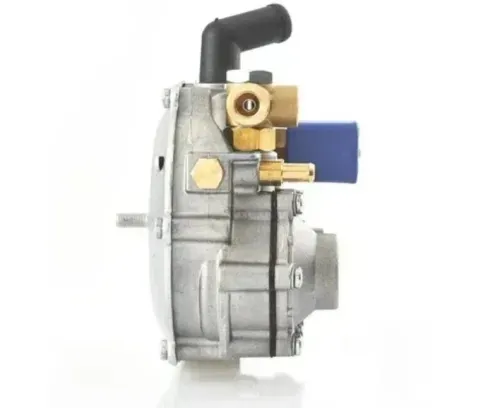
CNG or LPG changes the safety specification, not the lift’s rated capacity. Require illustrated lifting instructions that keep platforms and auxiliary jacks clear of the cylinder, multivalve, vapour lines and protective brackets.
| Vehicle or condition | Required specification and controls | Consequence of omission |
|---|---|---|
| CNG or LPG | Fuel isolation, leak-checking, suitable ventilation and ignition-source controls before service; prohibit hot work and grinding near an unverified system. | A lift can raise the vehicle while leaving a leaking or damaged fuel system unsafe. |
| Electric | Identify the battery tray, high-voltage cables and manufacturer-approved lifting points before raising the vehicle. | Contact with the tray or cables can cause damage or electrical injury. |
| Wash bay | Confirm water and detergent limits, platform drains, cylinder and hose protection, sealed limit switches, grease points, hose replacement intervals and corrosion warranty terms. | Water, mud, brake dust and oil can impair pins, hoses and switches without visibly weakening the structure. |
Test the scissor lift for fleet maintenance against oil and filter service, brake and tyre work, clutch or transmission removal, suspension repair, underbody inspection and washing. A full deck that gives good tyre access can still block gearbox or fuel-system work; specify removable recesses, sliding sections or an auxiliary jacking beam where needed.
Use the vehicle maker’s approved lifting points, never a thin floor panel, tank, cylinder, battery tray or unverified suspension part. Choose cleaning restrictions and maintenance routines that match the workshop’s daily cycle, rather than assuming an industrial rating covers wash-down use.
Turn the comparison into a commissioning and supplier checklist
Send every shortlisted supplier the same fleet table, vehicle drawings, approved lifting points, service tasks, floor details and electrical-supply information. A three wheeler lift in Coimbatore is comparable only when each supplier responds to identical operating conditions.
Measure these items side by side:
| Item | Compare | Why it matters |
|---|---|---|
| Usable deck | Length, width, wheel-stop position | Confirms passenger, cargo and electric vehicle fit |
| Capacity | Total safe working load and axle limits | Prevents overload from uneven front or rear loading |
| Access | Minimum height, clear working height and approach time | Shows whether the lift suits daily entry and repairs |
| Performance | Lowering time and loaded vehicle-in/vehicle-out cycle | Exposes empty-platform claims that slow fleet work |
| Protection | Locks, emergency stop, anti-burst valves and overload control | Defines what supports the vehicle during service |
| Support | Spare-part stock and preventive-maintenance intervals | Predicts downtime after installation |
Make the purchase conditional on these deliverables:
- A foundation review, installation drawing and electrical connection schedule.
- Operator training, illustrated lifting instructions for every vehicle family and a documented load test.
- A commissioning record, annual inspection procedure and written steps for emergency lowering, lock engagement and power-failure recovery.
- A response-time commitment for hydraulic leaks, control faults and damaged ramps.
Ask a three wheeler scissor lift manufacturer to demonstrate the loaded fit test, approved lifting-point check and safety devices on your actual vehicles. GMS Car Wash Equipments belongs in the comparison when it supplies these records and completes that demonstration before routine maintenance starts.
Related product
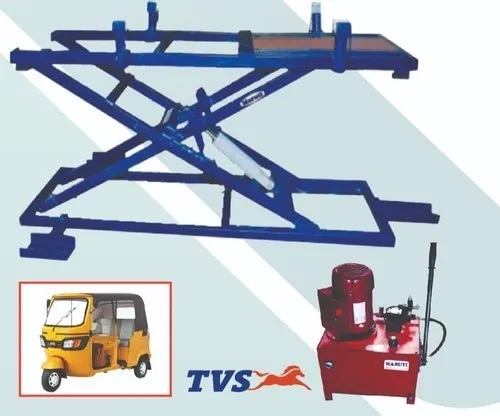 | Garage Equipments Three Wheeler Scissor Lift Manufacturer In Coimbatore | GMS Engineering Brand Maruti Warranty 12 months Material MS Surface Treatment Paint Coated Application Industrial GMS are one of the leading... View product → |
Frequently asked questions
How do you calculate the required capacity for a three-wheeler lift?
Add the vehicle’s measured weight to tools, spare parts, removed components and any service load placed on or inside it. Use the heaviest loaded vehicle in the fleet, not the average vehicle or kerb weight.
What platform details matter when choosing a three-wheeler scissor lift?
Compare platform length and width with the fleet’s wheelbases, tyre positions and body shapes. Check that the raised vehicle leaves enough room for wheel, brake, suspension and underbody repairs.
Which safety features should a fleet workshop specify?
Specify mechanical safety locks, hose-burst protection, a controlled emergency-lowering system, overload protection, stable hydraulic performance and a lockable electrical isolator. Request test records and installation instructions before commissioning.
What must you check for CNG, LPG and electric three-wheelers?
Confirm that lifting points do not contact tanks, valves, battery enclosures or high-voltage cables. Define safe isolation and inspection procedures, and keep the platform clear of components that require underside access.
Can a three-wheeler lift operate in a wash bay?
Check the lift’s corrosion protection, drainage, electrical enclosure rating and floor anchoring requirements. Separate washing from lifting when water, detergent or standing moisture could reach controls, pumps or electrical connections.
Keywords