A steam washer quote can range from a compact ₹25,000 unit to a commercial system above ₹4 lakh, depending on output, power supply, automation and accessories. By comparing the right specifications, operating limits and ownership costs, you can separate a workable machine from a low-price unit that cannot keep up with your business.
Key takeaways
- Budget from about ₹25,000 for the machine, excluding site-opening costs.
- Compare boiler output, pressure, tank size, power supply and recovery time.
- Choose a compact unit for mobile work and a higher-capacity system for busy bays.
- Verify warranty, service access, electrical requirements and delivered installation costs.
What does a steam car washer cost in Coimbatore?
A realistic steam car washer price in Coimbatore starts near ₹25,000, but the machine price alone does not show what you will spend to open the wash bay. Use these budgetary bands, not as verified local quotations:
| Configuration | Machine-only budget | What the price usually covers |
|---|---|---|
| Portable compact | ₹25,000–₹60,000 | Low output, small tank, short-duty cleaning |
| Trolley professional, single-phase | ₹60,000–₹1.5 lakh | Larger boiler, automatic refill, detailing tools |
| Mobile unit | ₹1.5–₹3 lakh or more | Higher-capacity equipment, reels, tanks or vehicle integration |
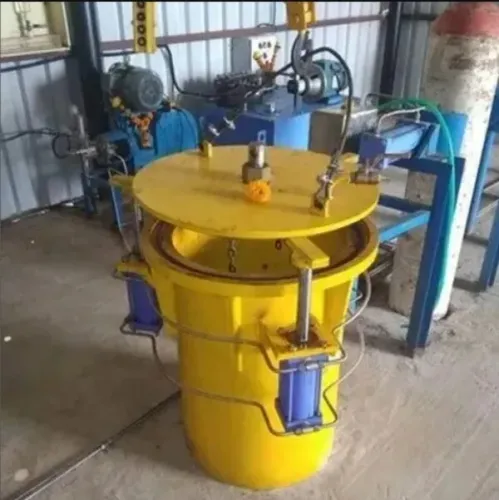
| Fixed commercial, three-phase | ₹1.5–₹4 lakh or more | Continuous-duty boiler, vacuum, detergent injection, multiple hoses |
A buyer searching “buy steam car washer” should compare continuous steam output, recovery time and back-to-back vehicle capacity, not only the highest temperature or pressure printed on the panel. A small boiler can heat quickly yet stop for recovery between cars; a larger boiler costs more and demands greater electrical capacity.
Add GST, freight to your site, unloading, installation, commissioning, electrical cabling, water treatment, hoses, nozzles, vacuum accessories and operator training to the quotation. Budget separately for descaling chemicals, towels, service visits, heating elements, seals, filters and hoses.
Hard water makes maintenance more expensive, so ask for feed-water limits, descaling instructions and local spare-part prices before accepting the lowest quote.
Which specifications actually drive the price?
A quoted 10-bar rating does not prove that a machine will clean continuously. Ask for operating pressure, steam temperature at the nozzle, moisture content, and actual steam output in kilograms per hour; pressure alone can describe a brief peak from a small boiler.
| Specification | What to verify | Why it changes price or results |
|---|---|---|
| Steam output | Continuous kg/h or L/h, not only peak rating | Higher output reduces recovery delays between vehicles |
| Boiler and heating power | Boiler volume, 3–6 kW heater, and heat-up time | Larger capacity improves throughput but increases electrical demand |
| Electrical supply | 230 V single-phase or three-phase; running and start-up current | A 3 kW heater draws about 13 A; 6 kW draws about 26 A before motor load |
| Duty rating | Continuous-duty operation and back-to-back vehicle test | A compact unit can overheat, lose pressure, or require refilling |
| Water system | Tank capacity, continuous-fill arrangement, and low-water cut-off | Small tanks create interruptions; untreated water accelerates scale |
| Controls and accessories | Hose length, nozzle sizes, detergent injection, vacuum and reel | Extra fittings raise price but can reduce operator time |
For a commercial steam car washer, match the nameplate to a dedicated circuit, proper earthing, and the site’s available phase. An ordinary 6 A or 16 A socket is not a safe substitute for a correctly sized 32 A or 63 A circuit.
Before buying a steam vehicle cleaning machine, request a back-to-back demonstration. Record recovery time, steam output after several vehicles, refill frequency, and whether the quoted rating is boiler pressure or usable cleaning performance.
Which washer type and configuration suits your site?
Choose the washer by soil load, vehicle volume, water availability and surface sensitivity—not by maximum pressure or temperature.
| Option | Best fit | Main advantage | Limitation |
|---|---|---|---|
| Steam-only | Detailing studios, interiors, engine bays and water-restricted sites | Low water use, controlled cleaning and short drying time | Slow on heavy mud; needs recovery capacity for back-to-back vehicles |
| Hot-water pressure | Petrol stations, workshops and fleet yards with grease, road film or baked mud | Fastest degreasing and exterior cleaning | Higher electricity or fuel use, splash, runoff and surface-risk |
| Cold-water pressure | General exterior washing and price-sensitive, high-volume work | Simple equipment, rapid rinsing and strong productivity | More water, longer drying and weaker grease removal |
| Foam equipment | Pre-wash stages and gentle maintenance cleaning | Loosens dirt before contact washing and reduces scratching | Not a complete washer; still needs rinsing and agitation |
For one operator, choose steam when interiors, upholstery, dashboards and water control matter more than hourly vehicle count. A commercial steam car washer suits a detailing studio or small fleet only when its continuous steam output supports the queue; a high initial temperature means little if the boiler needs long recovery.
Choose hot-water pressure for greasy commercial vehicles and cold-water pressure for routine exterior washing where drainage and water supply are adequate. Add foam equipment to either system when safer pre-soaking matters, but do not treat foam as a standalone solution.
Check hose reach, drainage, electrical phase, water storage and ventilation before choosing a steam car washer in Coimbatore. A compact unit fits limited premises; a fixed three-phase system suits steady throughput but demands more installation space and service access.
How do you operate steam safely and efficiently?
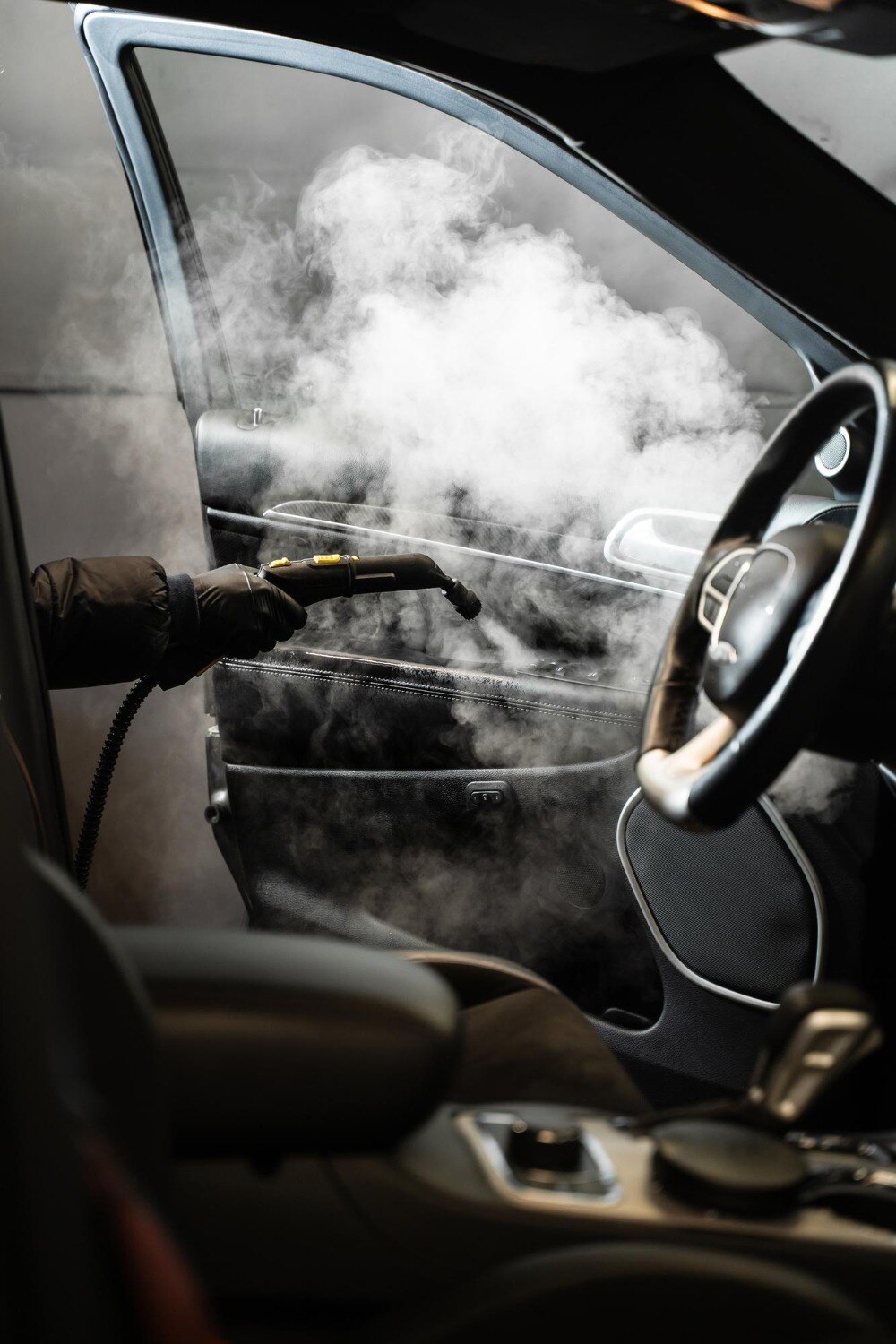
Use a steam vehicle cleaning machine as a controlled spot-cleaning process, not as a universal replacement for rinsing. Start with a shaded, cool vehicle; inspect paint, decals, leather, screens and loose trim before applying heat.
- Remove loose dust with a soft brush or low-pressure air. Pre-rinse sand, dried mud, road salt and heavy underbody deposits; steam can loosen them, but wiping the grit across paint causes scratches.
- Test steam on an inconspicuous area. Keep the nozzle moving, hold the distance recommended by the manufacturer, and use a clean microfiber towel to lift soil rather than spread it.
- Work from cleaner areas to dirtier areas. Use short bursts on door jambs, vents, seams, fingerprints and grease, then change towels before they become saturated.
- Ventilate the cabin and avoid forcing steam into switches, speakers, instrument clusters, sensors or electrical connectors. Wear heat-resistant gloves and eye protection.
- Vacuum moisture immediately and leave doors or windows open when safe. Drying time rises when you over-apply steam, use saturated towels or clean a cold, humid interior.
Steam suits light-to-moderate grime and tight surfaces. Choose a controlled pre-rinse or hot-water pressure wash for abrasive mud and underbody soil; choose a dedicated interior extraction method when fabric holds deep liquid contamination. Confirm quoted water use in litres per vehicle under working conditions: boiler feed, spot-rinsing, towel washing and vacuum-extractor filling still consume water.
What should you verify before placing a local order?
Ask the supplier to run your actual cleaning jobs, not only switch on a cold machine. During a demonstration, check heat-up time, continuous steam output, recovery between vehicles, moisture level, hose reach, operator controls and performance on glass, upholstery, engine-bay grease and exterior grime. Pressure or maximum temperature alone proves little.
Check these ownership details before you buy steam car washer equipment:
- Feed-water hardness limit, filtration or softener requirement, automatic-refill operation and the written descaling procedure.
- Local response time and stock availability for heating elements, seals, hoses, nozzles and vacuum filters.
- Warranty exclusions, preventive-maintenance intervals, service-visit charges and operator training.
| Supplier comparison | Confirm in writing | What goes wrong if omitted |
|---|---|---|
| Demonstration | Continuous steam rate, recovery time and moisture output | A small boiler looks powerful initially but pauses between vehicles |
| Water quality | Hardness limit, treatment equipment and descaling cost | Scale reduces heating performance and damages elements |
| Service | Technician location, response time and spare-part prices | Imported parts can stop the wash bay |
| Quotation | Machine, GST, freight, commissioning, reels, hoses, vacuum and detergent system | The installed cost exceeds the advertised steam car washer price in Coimbatore |
For a steam car washer in coimbatore, ask for a signed quotation with model number, phase, voltage, boiler rating, warranty period and delivery date. GMS Car Wash Equipments can be compared on those documented details rather than on a headline price alone.
An automatic refill system improves workflow but does not remove water treatment or periodic descaling.
Frequently asked questions
What does a steam car washer cost in Coimbatore?
A basic steam car washer starts near ₹25,000 as a budgetary machine price. Confirm the quotation because accessories, transport, installation, electrical work and service coverage can increase the opening cost.
Which specifications drive steam car washer pricing?
Boiler capacity, steam output, working pressure, heating method, water-tank size, electrical load, hose length, recovery time and included accessories have the greatest effect on price.
Which steam vehicle cleaning machine suits my site?
Choose a compact unit when you need mobility or have limited wash-bay space. A higher-capacity commercial steam car washer suits a fixed site handling repeated vehicles with short turnaround times.
What should I verify before buying a steam car washer in Coimbatore?
Ask for the written specification sheet, power requirement, warranty terms, spare-parts availability, service response process, delivery scope, installation charges and final tax-inclusive quotation.
Keywords