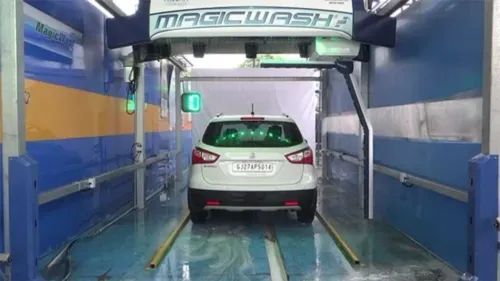
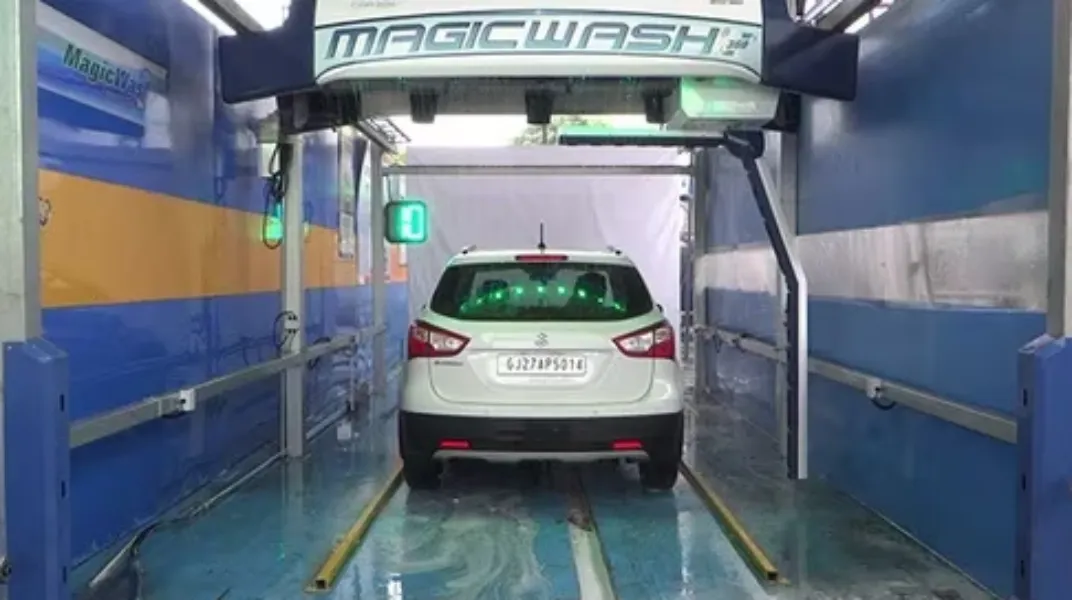
An automatic car wash machine cleans vehicles through a coordinated sequence of water application, chemical dosing, surface agitation or touchless pressure washing, rinsing and optional drying. Unlike manual washing, the system follows programmed stages designed to provide repeatable results while controlling labour, water and chemical usage.
Understanding this process helps car wash operators, dealerships, fleet owners and service centres decide whether automation suits their daily vehicle volume.
Vehicle Entry and Positioning
The wash begins when the vehicle enters the bay or conveyor area. Sensors detect its position, dimensions or movement, depending on the machine design. Clear entry markings and wheel guides help the driver place the vehicle correctly.
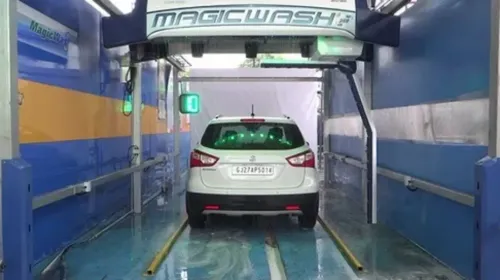
Some systems remain stationary while a gantry travels around the car. In conveyor installations, the vehicle moves through separate cleaning zones.
Pre-Wash Application
The pre-wash stage loosens mud, dust, road film and oily deposits. Water and cleaning chemicals are applied across the body, wheels and lower panels. Allowing suitable dwell time helps the solution break down contamination before the main wash.
This stage is particularly useful in Coimbatore, where vehicles may collect a mixture of urban dust, monsoon residue and dirt from industrial or highway routes.
Main Cleaning Stage
Automatic car wash machines generally use one of two cleaning methods.
Brush-Based Washing
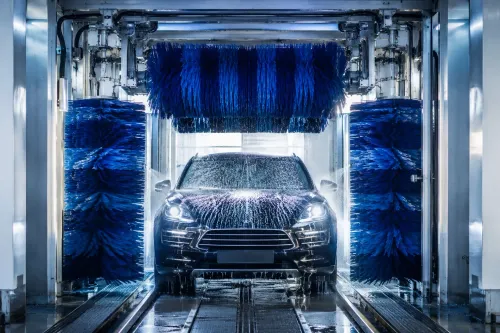
Soft brushes or textile materials make controlled contact with the vehicle. They rotate or move along the body while water and detergent are applied. Correct brush condition, alignment and lubrication are essential for consistent cleaning.
Touchless Washing
A touchless system uses high-pressure water and specialised chemicals without brushes contacting the body. It can be attractive to customers concerned about physical contact, although chemical selection, water pressure and nozzle coverage must be carefully balanced.
Neither format is universally superior. The right system depends on expected vehicle types, desired wash quality, available space and operating model.
Rinsing and Optional Finishing
After cleaning, the machine rinses away loosened dirt and chemical residue. Additional treatments may include:
- Underbody washing
- Wheel cleaning
- Wax application
- Spot-free final rinse
- Air drying
- Tyre or arch cleaning
A spot-free rinse commonly uses treated water to reduce mineral marks on the vehicle surface. This can be especially valuable where local water has higher dissolved mineral content.
Water and Chemical Management
Automatic washing does not eliminate the need for operational control. Nozzles must remain clear, chemical dosing should be calibrated, and water quality needs regular monitoring. Excess detergent increases cost and can leave residue, while insufficient chemical may produce inconsistent results.
Water recycling can reduce fresh-water demand by collecting, settling and filtering wastewater for suitable reuse stages. Final rinsing may still require cleaner or specially treated water.
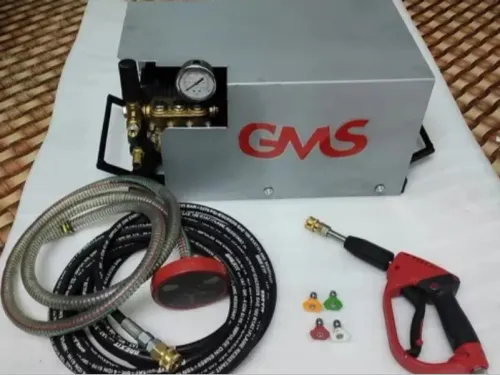
GMS Car Wash Equipments manufactures and supplies automatic car wash solutions for businesses assessing vehicle-washing automation in Coimbatore. The suitable configuration depends on the site layout, expected washes per day, vehicle mix, water availability and service capacity.
Daily Checks That Support Consistent Results
Operators should inspect the machine before opening each day. Useful checks include:
- Sensor cleanliness and alignment
- Nozzle condition
- Brush wear, where applicable
- Chemical levels
- Water pressure
- Pump sounds and vibration
- Emergency-stop operation
- Drainage and recycling filters
Automation delivers its best results when equipment, chemicals and routine maintenance work together. A correctly selected and well-managed machine can improve wash consistency, shorten service time and help automotive businesses handle growing vehicle volumes efficiently.
Keywords